Previous AI Fellows
2024 - 2025 AI Fellows
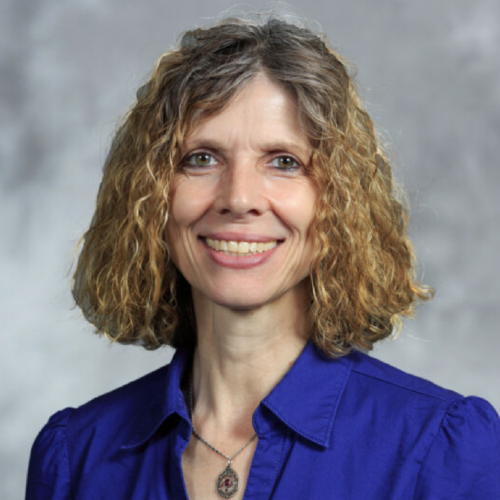
Carolin Fuchs
Carolin Fuchs
College of Sciences and Humanities
As a Faculty Fellow, Carolin partnered with Louis Green (Director of Belonging Initiatives) to organize panel discussion on “Inclusive AI” for the College of Social Sciences and Humanities (CSSH). This interactive panel was part of CSSH’s Pedagogy-in-Progress series and featured Vance Ricks, Associate Teaching Professor (CSSH and Khoury College of Computer Sciences) and Lance Eaton, Senior Associate Director (CATLR).
Working with CSSH faculty and deans, Carolin helped establish a GenAI Ad Hoc Committee. In collaboration with the Writing Program, a team from CSSH was accepted into the American Association of Colleges and Universities’ (AAC&U’s) 2025-26 Institute on AI, Pedagogy, and the Curriculum, a year-long program.
Working with the AI Instructional Assistants, Carolin designed a survey and focus group process for eliciting the student perspective on AI use, which the Instructional Assistants carried out. In addition, they conducted a landscape analysis of effective strategies for AI use in asynchronous online courses.
Within her teaching practice, Carolin developed a series of prompts and reflective activities for her students to use as they practiced conversational German with Claude. This practice, and the results, can be accessed in the link provided below.
Related Links:

Jennifer Gradecki
Jennifer Gradecki
College of Art, Media, and Design
In her role as AI Fellow for the College of Arts, Media and Design, Jennifer established a new website for showcasing AI-related student work, while also contributing to an existing website for training and support. She developed the AI Showcase site to celebrate the work that CAMD students have done involving AI, and to inspire faculty with ideas for integrating AI into their courses. In addition to these web projects, Jennifer conducted numerous conversations and email exchanges with CAMD faculty to gather information about–and insight into–the current and changing landscape of AI initiatives and groups in the College. She summarized her findings in a report that was made available to College administration.
Related Links:
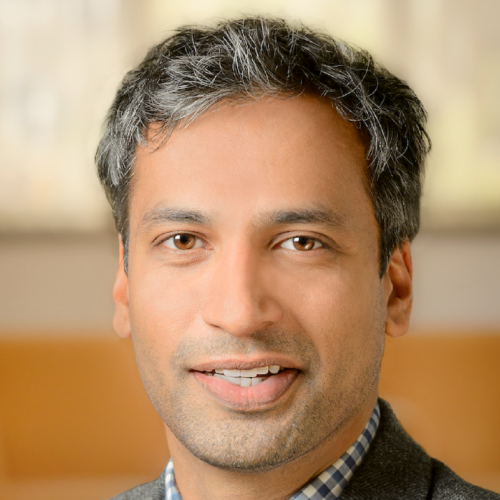
Hemanth Gundavaram
Hemanth Gundavaram
School of Law
As a Faculty Fellow, Hemanth convened an Experiential Education Committee that was charged with developing a Memorandum on AI in Legal Education for the School of Law. The AI Instructional Assistants worked with him to develop a landscape analysis of practices and policies in law programs, in addition to how AI is being used in law professions.
Hemanth collaborated with two faculty members to pilot the use of Notebook LM in generating podcasts of legal case discussions, synthesizing student contributions on a specific case into one podcast. Access the write up of this class practice through the link below.
Over the summer of 2025, he convened a colloquium for 30 of the Law School faculty titled Using AI to Enhance Law Teaching and Learning.
Related Links:

Thomas Kelley
Thomas Kelley
College of Science
Tom Kelley, AI Fellow from the College of Science, convened cross-disciplinary working groups spanning biology, physics, linguistics, math, and psychology that engaged over 30 faculty members in examination of AI’s educational applications.These ongoing working groups provide collaborative forums for faculty to address questions around ethics, assessment design, student skill development, and academic integrity in an AI-enhanced environment. As part of his classroom practice, Tom designed and implemented an assignment in Physics 3211 that invited students to use AI chatbots as coding assistants, fostering critical prompt design and reflective evaluation of their collaboration. He also co-developed and implemented Newton, an interactive AI chatbot that serves as a tutor for introductory physics, supporting students’ problem-solving and conceptual understanding. Working with AI Instructional Assistant Sebastian Thomas, they systematically analyzed student-generated prompts and AI responses to gain insights to refine the system’s pedagogical effectiveness and inform future iterations of AI-assisted learning.
Related Links:
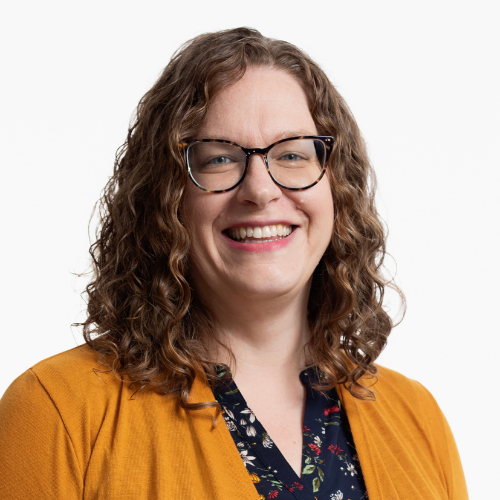
Tiffany Kim
Tiffany Kim
Bouvé College of Health Sciences
As an AI Faculty Fellow for the Bouvé College of Health Sciences, Tiffany Kim advanced college- and university-wide dialogue on the ethical and innovative use of AI in teaching. She designed and facilitated the Bouvé AI Teaching Exchanges, a four-school series attended by 174 faculty, which shifted conversations from a reactive posture to a proactive exploration of AI’s potential to enhance learning. In parallel, she developed AI SimBot, a generative AI-powered virtual patient and debriefer that provides nursing students with scalable, low-cost, and psychologically safe opportunities to practice sensitive communication skills, such as substance use screening. She presented at the AI in Action showcase (500+ attendees), co-led a panel at the CAEBL Conference, and was featured in a university-wide course on teaching with AI. Tiffany is pursuing grant-funded research to evaluate AI SimBot’s impact on competence and self-efficacy, with plans to create additional diverse patient scenarios that promote inclusive training.
Related Links:
- AI Gallery: Building a Chatbot to Practice Interviewing a Patient
- AI in Teaching & Learning Fellows CAEBL Panel (2025)
- Bouvé Generative AI Teaching Exchange: School of Nursing
- Bouvé Generative AI Teaching Exchange: Pharmacy
- Bouvé Generative AI Teaching Exchange: Community Health and Behavioral Sciences
- AI in Action presentation collection (video)
- AI in Action presentation collection (slides)
Barbara Larson
Barbara Larson
D'Amore-McKim School of Business
As the AI Fellow for D’Amore-McKim School of Business, Barbara developed a series of AI in Teaching workshops that she customized and delivered to faculty in each group within DMSB. After the workshops, Barbara created, compiled, and distributed a follow-up package of recordings and other related materials. The workshops utilized external and internal expertise to give faculty material and insights customized to each group’s discipline. To gain the insights and information needed to customize the workshops, Barbara (in collaboration with Kwong Chan) identified, invited, and convened AI in Teaching Advisory Groups (TAG). She met with each of the seven groups to learn about their colleagues’ critical AI-related concerns. In addition, Barbara conducted an anonymous survey of DMSB faculty regarding use of AI and AI policies in December 2024. While the main goals of the survey were to establish a baseline of faculty use of AI in teaching and learning in DMSB and to identify any common faculty concerns or needs related to AI, the results were also leveraged to help customize the workshops. In addition to these activities, Barbara also presented at a DMSB “AI in Teaching Day” event.
Related Links:
John Rachlin
John Rachlin
Khoury College of Computer Sciences
As the AI Fellow for the Khoury College of Computer Science, John led many activities across Northeastern to open important discussions about teaching and learning with AI. He began the year with a one-day “Teaching with AI” conference for 75 Khoury faculty from across the Global Network and also met with all Khoury academic advisors to help them think about how AI will inform and evolve what students need. At the intuitional level, John led an AI in Action session on developing custom applications and data visualizations attended by over 400 people. John also served as faculty lead on the Northeastern-wide AI Curriculum Working Group which developed a quick-start guide for all colleges to consider how they could go about integrating AI across their programs. In his own teaching, John developed many activities and project assignments that integrate AI, often with the goal of helping students critically evaluate what AI actually produces.
Relevant Links:
- AI Gallery: AI-Generated Summaries – Are They Any Good?
- AI in Teaching & Learning Fellows CAEBL Panel (2025)
- AI-in Action presentation collection (video)
Gunar Schirner
Gunar Schirner
College of Engineering
Gunar Schirner, AI Fellow from the College of Engineering, founded a working group of faculty from across COE departments to guide college approaches to integrating AI into teaching and learning. The council was formed with the Dean’s support in collaboration with the Associate Dean of Teaching, Learning and Experiential Education, Sue Freeman. The Council has 10 members including the Associate Dean of Undergraduate Education, as well as one representative from the Institute of Experiential AI. The AI Council collaborates with another faculty group called IMPACT: Innovations and Multidisciplinary Pedagogical Advancements in Collegiate Teaching (led by Sue Freeman). One outcome was a Summer workshop series that offered seven workshops about AI in teaching between May and July 2025. Professor Schirner developed and facilitated one of these workshops, “Navigating Programming Education in the AI Age.” The AI Council and IMPACT developed a joint website to document and promote their ongoing collaborative work.
Related Links:

John Wilder
John Wilder
College of Professional Studies
As a champion for AI-enhanced teaching and learning in the College of Professional Studies, John Wilder provided support and leadership by serving in an information gathering and advising role. Through these activities, John met regularly with the CPS Associate Dean for AI Initiatives to strategize, met with colleagues to answer questions and respond to concerns, and joined existing committees and working groups to exchange information and ideas. In addition, John delivered a presentation at a CPS all-college meeting and contributed to the development of a new AI concentration for the Doctor of Professional Studies program in CPS. To further his own AI-engaged teaching practice, he developed a flipped classroom activity in which students worked in small groups to troubleshoot a complex error in provided Python code and use an AI tool to help them generate a solution.
Related Links: